Clothes coming out damp after a full cycle is one of those problems that gets old fast. The dryer runs, the drum turns, the timer counts down — but open the door and everything is still wet. Or worse, cold.
Most dryer heating failures come down to a handful of causes, and several of them are things you can check yourself before calling anyone. Here's a practical breakdown of what goes wrong, how to tell which problem you have, and when it makes sense to repair versus replace.
The Most Common Reasons a Dryer Stops Heating
1. Clogged vent — the most common cause
Blocked dryer vents are behind more heating failures than any other single cause. When airflow is restricted, the dryer's thermal safety devices trip to prevent overheating — and that shuts off the heat. The dryer keeps tumbling, but no warm air gets through.
In Florida's climate, vents collect lint faster and are more prone to moisture buildup that traps debris. If your vent runs more than 10–15 feet, has multiple bends, or hasn't been cleaned in over a year, start here.
2. Blown thermal fuse
The thermal fuse is a one-time safety device — when it blows, it stays blown. It's designed to cut power to the heating circuit if the dryer gets too hot, and once triggered it won't reset. A dryer with a blown thermal fuse will run normally but produce no heat at all.
The fuse itself is inexpensive (usually under $20), but it blows for a reason. If you replace it without addressing the underlying cause — usually a clogged vent or failing thermostat — it will blow again.
3. Failed heating element (electric dryers)
Electric dryers generate heat through a coiled metal element, similar to an oven burner. Over time, these coils break. When they do, the dryer loses some or all of its heat depending on where the break is. A partially broken element may still produce some warmth but won't reach drying temperature.
Heating elements are straightforward to test with a multimeter and relatively inexpensive to replace — typically $30–$80 for the part.
4. Faulty thermostat
Dryers use multiple thermostats to regulate temperature at different points in the cycle. When one fails, the dryer may heat inconsistently, overheat and shut down mid-cycle, or not heat at all. Thermostat failures are trickier to diagnose than a blown fuse because the symptoms vary.
5. Igniter or gas valve issues (gas dryers)
On a gas dryer, the igniter lights the burner, and solenoid valves control gas flow. A weak igniter may glow but fail to ignite the gas — similar to what happens with a gas oven. Failed valve solenoids are also common on older gas dryers and prevent the burner from staying lit past the first few seconds.
What You Can Check Before Calling a Technician
These steps won't fix every problem, but they'll rule out the simple ones and give a technician useful information if you do need to call.
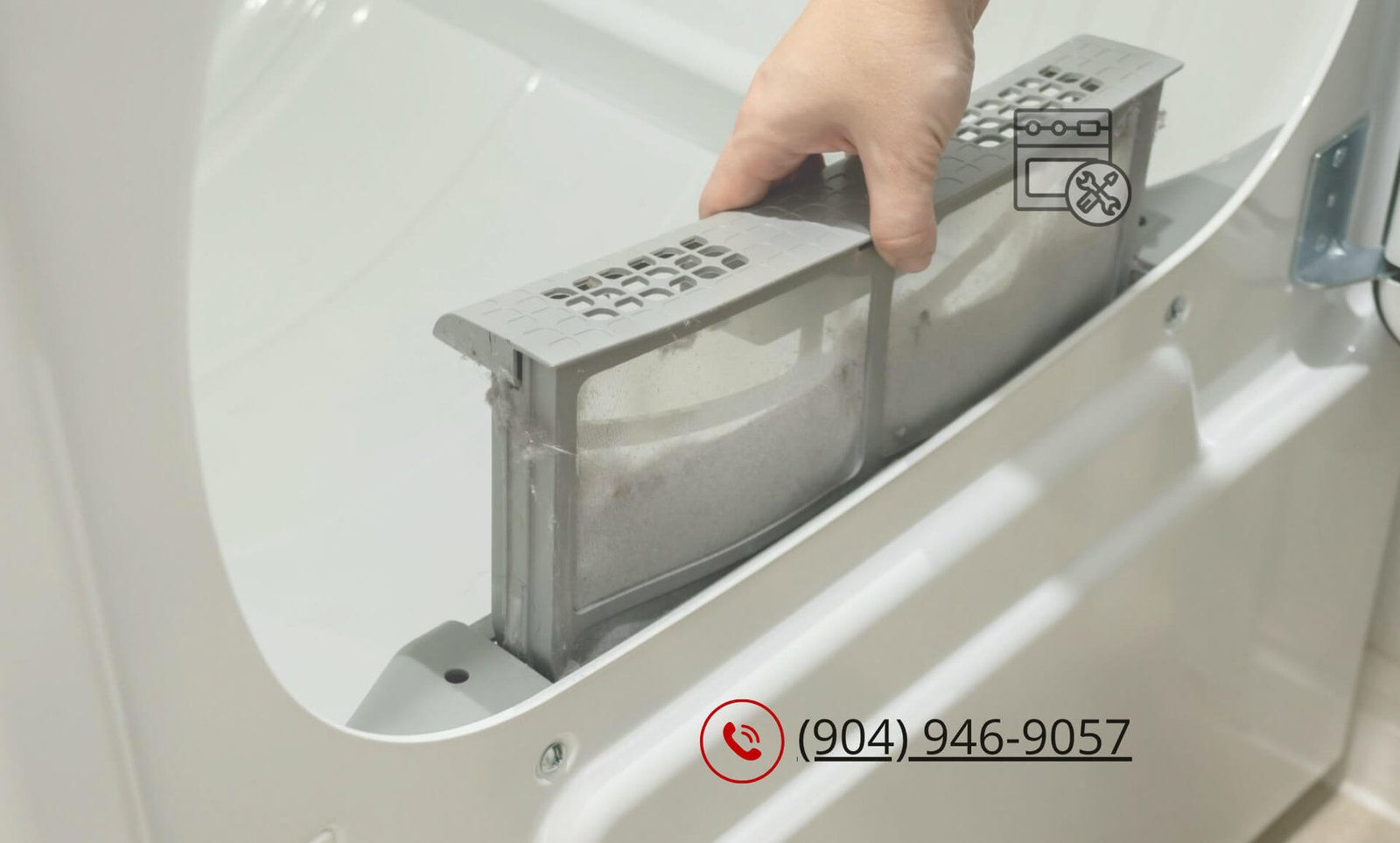
- Clean the lint trap — do this before every load, but if you haven't in a while, do it now and check whether there's lint packed into the housing below the trap
- Check the vent hose — disconnect it from the back of the dryer and look for blockages, crushing, or kinks. Run your hand through as far as you can reach
- Check the breaker — electric dryers use two breaker poles, and it's possible for one to trip while the other stays on. This lets the motor run (so the drum turns) while cutting power to the heating element. Reset both breakers fully even if they don't appear tripped
- Confirm it's actually a heating problem — if the dryer takes 2–3 cycles to dry a normal load but does eventually dry, that's different from producing no heat at all. Partial heat usually points to a vent restriction or weak heating element rather than a complete component failure
If none of these reveal an obvious cause, the problem is most likely internal — thermal fuse, thermostat, heating element, or in gas dryers, the igniter or valve solenoids. These require testing with a multimeter to diagnose accurately.
Repair vs. Replace: Making the Right Choice
The standard advice is to replace any appliance that's more than halfway through its expected lifespan if the repair costs more than half the price of a new unit. For dryers, expected lifespan is around 10–13 years.
In practice, most dryer heating repairs fall well under that threshold:
- Thermal fuse replacement: $75–$150 including labor
- Heating element replacement: $100–$200 including labor
- Thermostat replacement: $100–$175 including labor
- Vent cleaning (professional): $80–$150
- Igniter or gas valve solenoids: $100–$200 including labor
A new mid-range dryer runs $500–$900 installed. For a dryer under 8 years old with a single failed component, repair almost always makes more financial sense. Where it gets complicated is if the dryer has had multiple issues in the past year, or if the drum bearings or motor are also failing — at that point, you're often better off putting the repair money toward a replacement.
One honest note: if a technician quotes you significantly more than the ranges above for a single-component repair on a standard dryer, it's worth getting a second opinion.
How to Prevent Heating Problems Before They Start
The single most effective maintenance task for a dryer is keeping the vent clear. In Northeast Florida specifically:
- Clean the lint trap before every load — a clogged trap restricts airflow immediately
- Have the vent duct professionally cleaned once a year, especially if it runs more than 10 feet or has multiple turns
- Check the exterior vent cap seasonally — bird nests, insect nests, and debris accumulate quickly in Florida and can fully block the vent
- Don't overload — consistently running oversized loads makes the dryer work harder and generates more heat stress on components
Beyond vents, there's not much routine maintenance that's practical for homeowners on a dryer. Annual professional inspection of heating components can catch a thermostat or element that's degrading before it fails completely — but this is optional, not essential.
Dryer Repair in St. Augustine, Jacksonville, and Palm Coast
If your dryer isn't heating and the basic checks haven't resolved it, GDoing handles dryer repair across St. Augustine, Jacksonville, Palm Coast, St. Johns, Ponte Vedra, and surrounding areas. We diagnose the actual cause of the problem — not just replace parts until something works — and give you an honest assessment of whether repair makes sense for your specific machine.
Most dryer heating repairs are completed in a single visit. Call +1 (904) 946-9057 or contact us online to schedule a same-day or next-day appointment.