Ovens in Florida work hard — holiday gatherings, weekend cookouts, weeknight dinners. And in St. Augustine specifically, the combination of coastal humidity and salt air means grease and grime accumulate faster than they would in a drier climate. Regular cleaning isn’t just about aesthetics; buildup inside an oven affects heating efficiency and, over time, can contribute to sensor and element failures.
The good news is that keeping an oven clean doesn’t require anything from a hardware store. Here’s what actually works, what to avoid, and how often to do it.
Why Safe Oven Cleaning Matters in St. Augustine Homes
Salt air and high humidity are hard on appliances in general, but they create a specific problem for oven interiors: grease and food residue absorb moisture from the air and become harder to remove over time. What wipes off easily after one week becomes baked-on carbon after two months.
This matters for the oven’s components, not just its appearance. Heating elements and temperature sensors sit inside the oven cavity. When thick residue builds up around them, it affects how heat distributes and how accurately the oven reads temperature. An oven that’s consistently running 25°F hotter or cooler than the set temperature is often simply overdue for a cleaning.
Strong chemical cleaners add a separate problem: in a humid, often sealed Florida home, fumes from commercial oven cleaners linger longer than they would in drier climates. Natural alternatives clean effectively without that tradeoff.
How Often Should You Clean Your Oven in St. Augustine
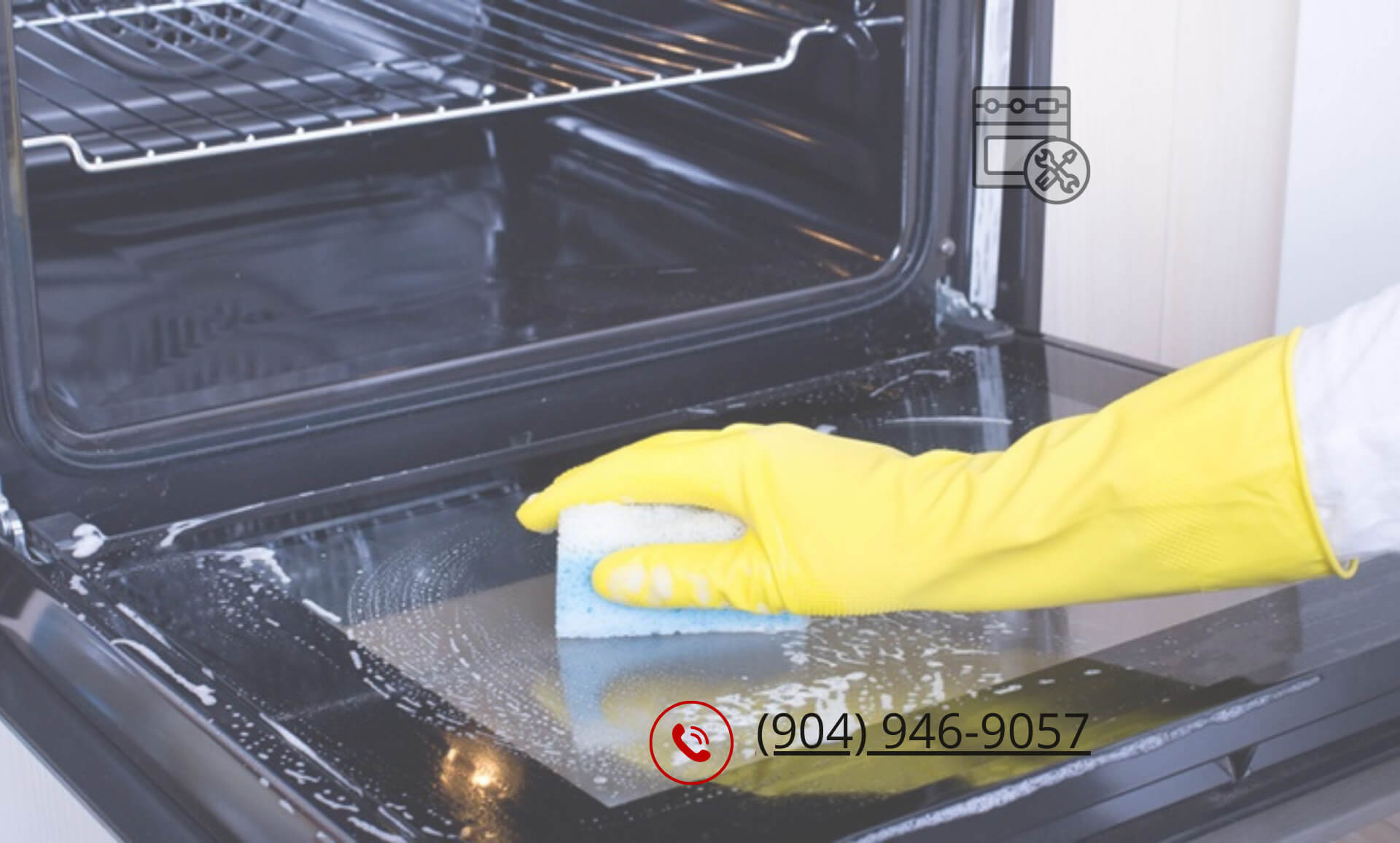
The standard recommendation is every 3–6 months. In St. Augustine, that range shifts toward the shorter end — every 2–3 months is more realistic for a regularly used oven.
A few factors push toward more frequent cleaning:
- Cooking seafood, which leaves behind oils and odors that linger and reburn on subsequent uses
- High-humidity months (June through September) when grease absorbs ambient moisture and becomes stickier
- Households that cook daily versus a few times a week
The easiest way to stay on schedule: do a light wipe-down weekly and a deeper clean every 2–3 months. The weekly habit makes the quarterly deep clean much faster.
How to Clean Oven Without Chemicals
Three ingredients cover almost every oven cleaning situation: baking soda, white vinegar, and lemon. You don’t need all three at once — each works well independently, and combining baking soda and vinegar is effective for heavier buildup.
Baking soda is mildly abrasive and alkaline, which makes it effective at breaking down acidic grease and carbon deposits. Vinegar’s acidity reacts with baking soda to help lift loosened residue. Lemon provides natural acidity and leaves the oven smelling clean after heating.
None of these leave chemical residue that could affect food or linger as fumes — a real advantage in a tightly climate-controlled Florida home.
Baking Soda and Vinegar Oven Cleaning
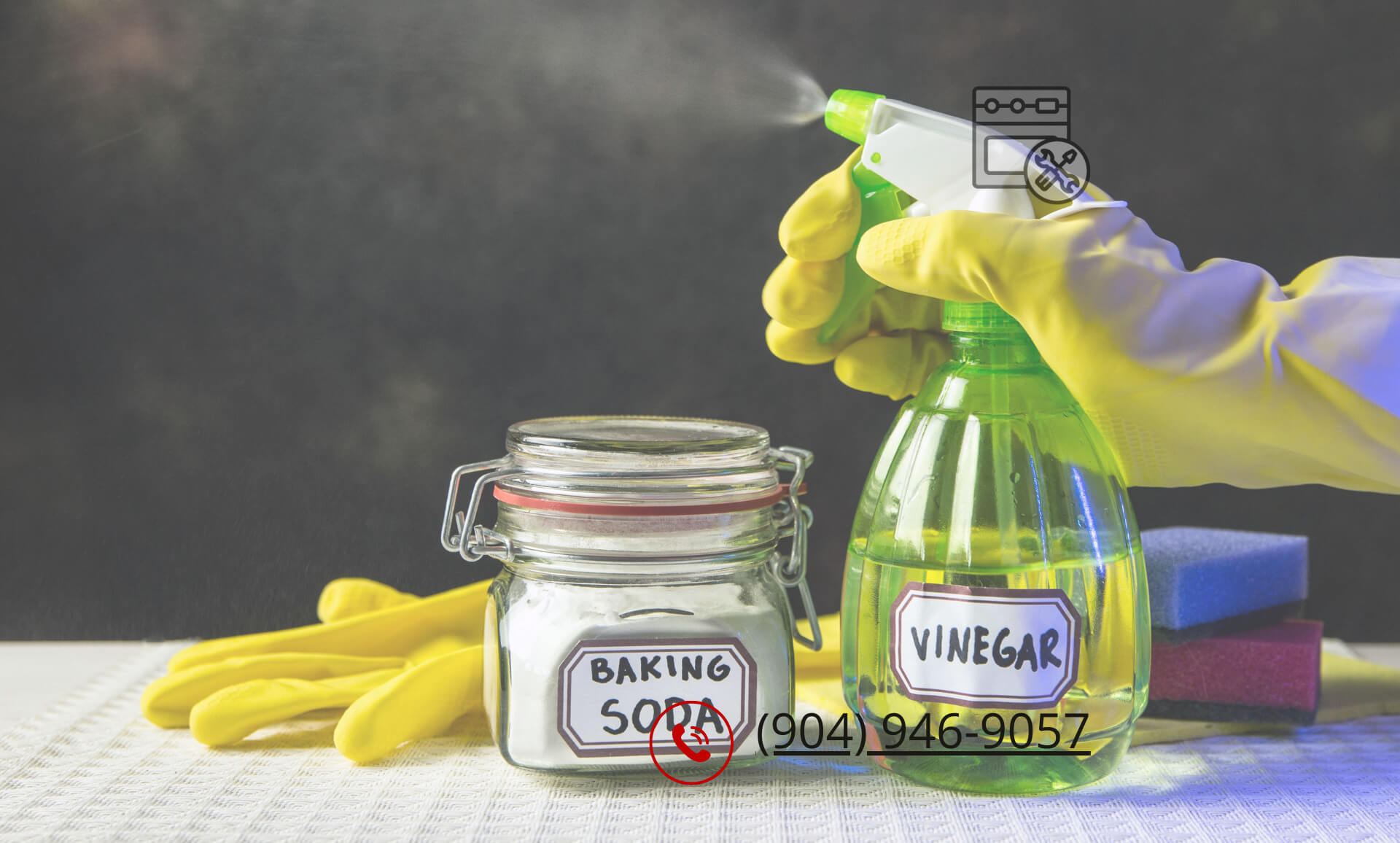
This is the most effective method for a thorough clean and works on both gas and electric ovens.
- Mix baking soda with just enough water to form a thick paste — roughly the consistency of toothpaste
- Spread the paste across the oven interior, focusing on areas with visible grease or carbon buildup. Avoid the heating elements and temperature sensor
- Let it sit for at least 4 hours — overnight works best for heavier buildup
- Spray or wipe white vinegar over the dried paste. It will fizz; that reaction helps lift the loosened residue
- Wipe everything down with a damp cloth, rinsing frequently. A silicone spatula helps scrape thicker deposits without scratching the surface
- Leave the oven door open for 30 minutes afterward to air out, especially important in humid weather
For St. Augustine homes: do this in the evening when outdoor humidity tends to drop slightly, and run a kitchen exhaust fan if you have one. The vinegar smell dissipates within an hour.
Best Way to Clean Electric Oven in St. Augustine
Electric ovens need one extra precaution compared to gas: the exposed heating elements at the top and bottom of the oven cavity should never be scrubbed or have liquid applied directly to them. They’re sealed, but moisture can work into connections over time.
Otherwise, the process is the same as above. A few specifics for electric ovens:
- Turn off and unplug the oven before cleaning — electric ovens should never be cleaned while powered, even if they’re cool
- Apply paste with a cloth or sponge, working around the elements rather than over them. If there’s buildup directly on an element, wipe it gently with a barely damp cloth only
- Clean the oven door glass separately — a paste of baking soda and water applied to the inside of the glass and left for 20 minutes removes most cloudiness and grease
- Pull racks out and clean them in the sink with dish soap and warm water. For stubborn buildup, soak them in a baking soda and hot water solution for an hour
Safe Oven Cleaning Methods
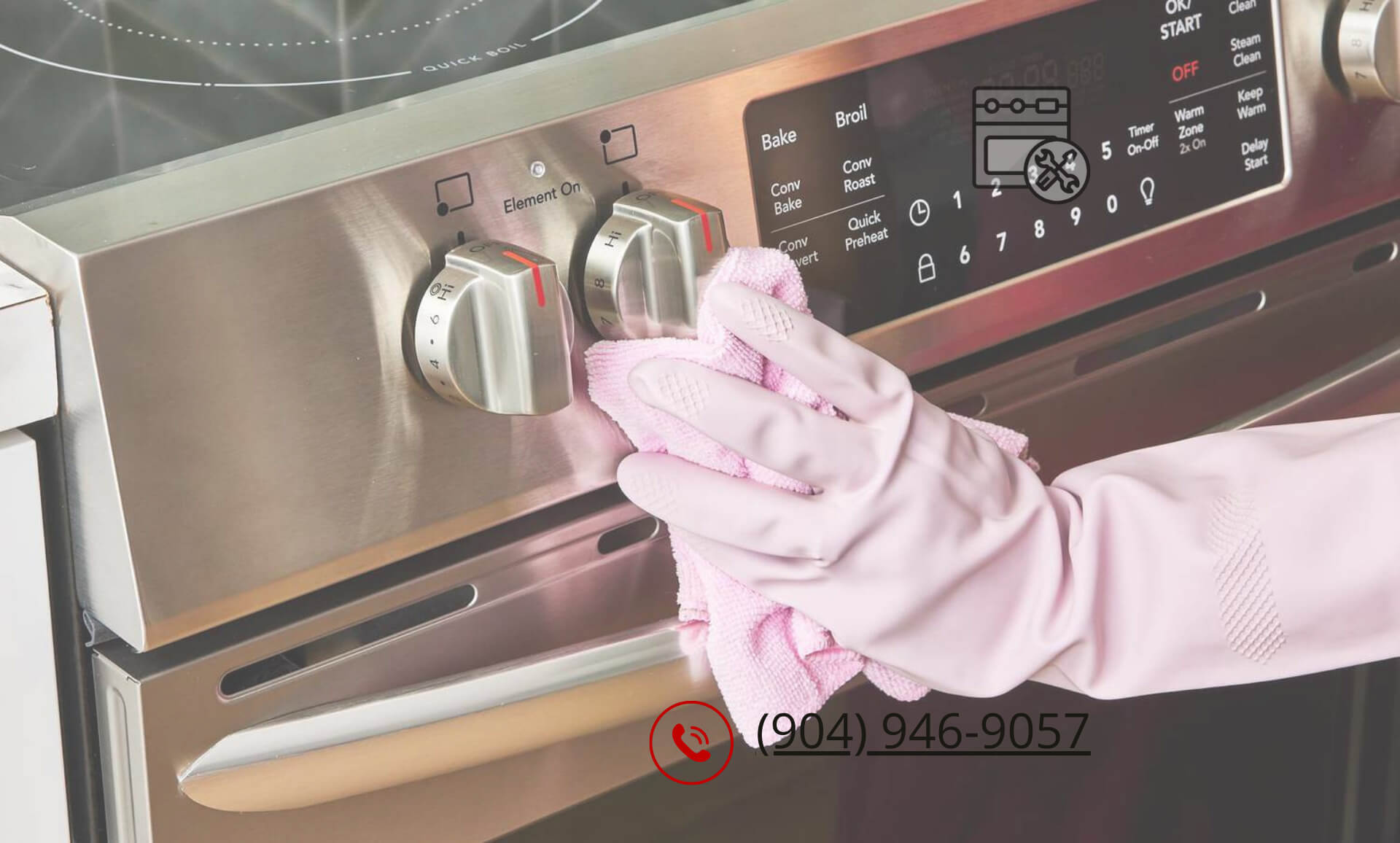
Three methods worth having in rotation:
- Baking soda and vinegar paste — best for deep cleaning every 2–3 months. Takes time (overnight is ideal) but handles even heavy carbon buildup without chemicals
- Lemon steam cleaning — place lemon slices and water in an oven-safe dish, heat to 250°F for 30 minutes, then wipe down while the oven is still slightly warm. Best for light maintenance between deeper cleans and leaves the oven smelling fresh
- Post-cooking wipe-down — while the oven is still warm (not hot), a damp cloth picks up fresh spills before they bake on. Ten seconds of wiping after cooking seafood or anything greasy prevents the residue from becoming a problem
How to Clean Oven Safely
A few non-negotiables regardless of which method you use:
- Always let the oven cool completely before cleaning — surfaces that feel cool to the touch on the outside can still be hot inside
- Turn off or unplug the oven before starting — for gas ovens, make sure the burners are off and the igniter is not cycling
- Remove racks before cleaning the interior — clean them separately so you can reach all surfaces of the cavity
- Never spray liquid directly onto the temperature sensor or heating elements — apply cleaning solution to your cloth, not to the surface
- Don’t use steel wool or metal scrapers on oven interiors — they leave scratches that collect grease and can damage the enamel coating
Local Maintenance Tips for St. Augustine Residents
A few habits that make a real difference in this climate:
- Use a baking sheet or oven liner under dishes that might bubble over — catching spills before they hit the oven floor is much easier than removing baked-on carbon later
- Wipe down after cooking seafood or anything with a lot of oil — these leave the most stubborn residue if left to bake on during the next use
- Check the oven door seal annually — in humid climates, door gaskets can degrade faster, letting steam and grease accumulate around the door frame
- If your oven starts taking longer to preheat or cooking unevenly, cleaning is the first thing to try before assuming a component has failed
If cleaning doesn’t resolve performance issues — or if you notice burning smells, error codes, or the oven not reaching temperature — that’s usually a sign of a component problem rather than buildup. GDoing handles oven repair across St. Augustine, Jacksonville, and Palm Coast. Call +1 (904) 946-9057 to schedule a same-day inspection.