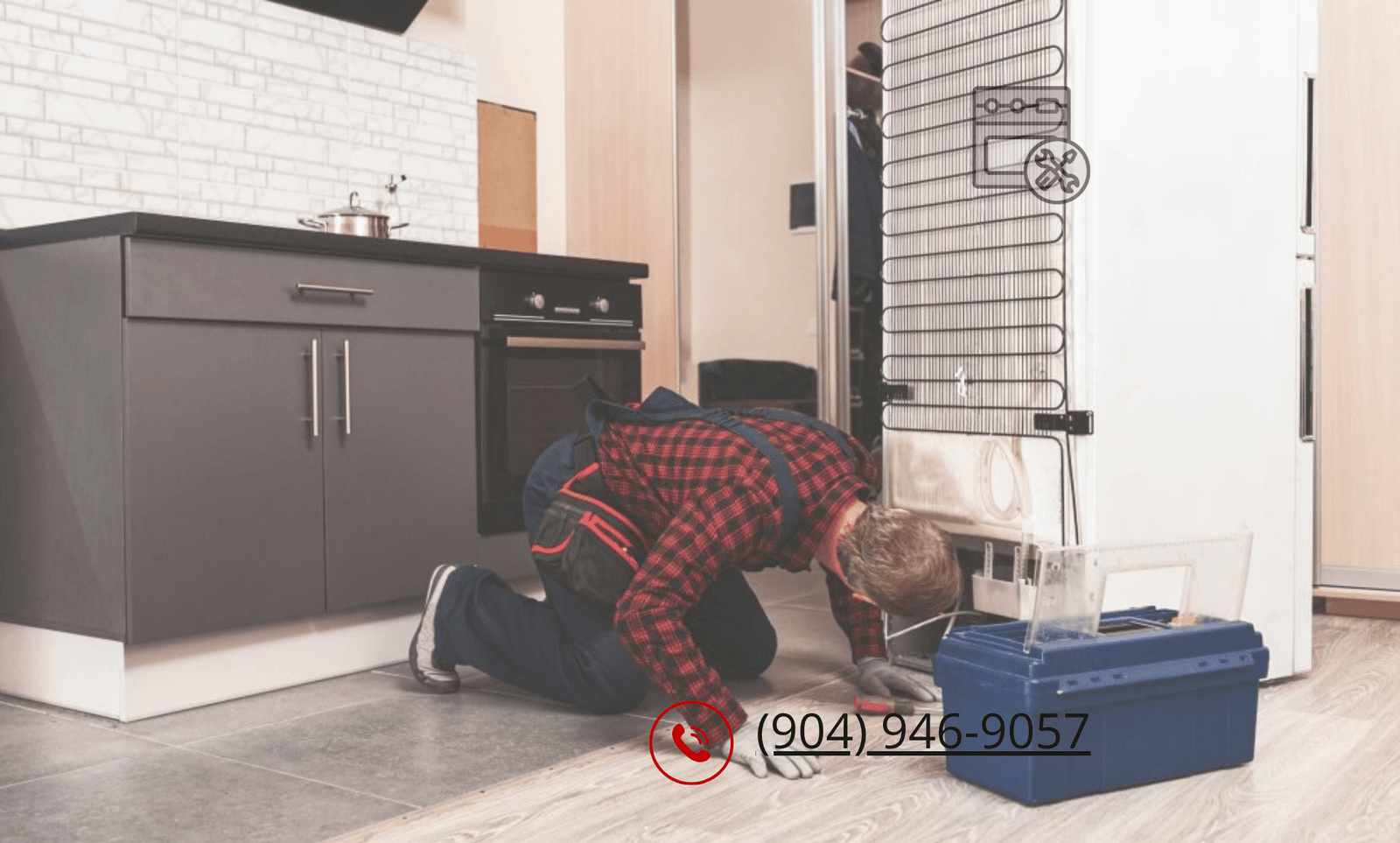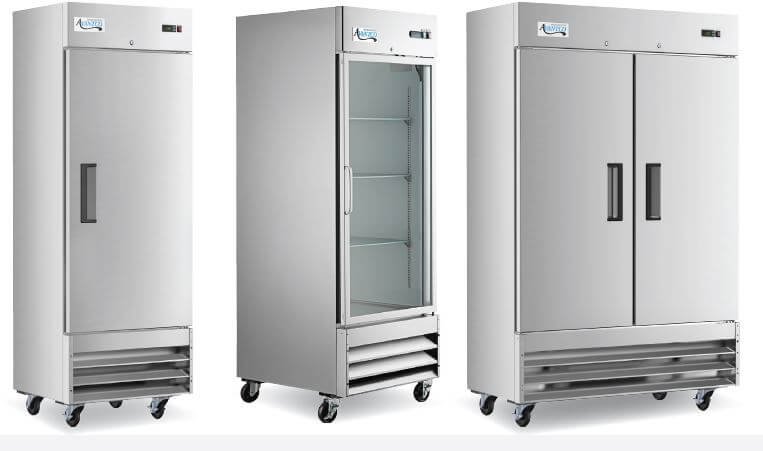
A homeowner in downtown St. Augustine called about a refrigerator that was losing its grip. Milk spoiled days ahead of its date, produce wilted early, and the freezer swung between fine and not-quite — yet the machine hummed along as if nothing were wrong.
The house was older than the appliance, the kitchen fit the fridge like a glove, and the unit itself was a simple mechanical model of the kind that rewards repair. This case shows how a fault that feels like a dying compressor often turns out to be a part the size of a matchbox.
The service call
The description over the phone was the classic quiet failure: interior light on, motor running at least some of the time, seals apparently fine, but temperatures creeping upward over a week or two. The homeowner had already lost one round of groceries and wanted a verdict before losing a second.
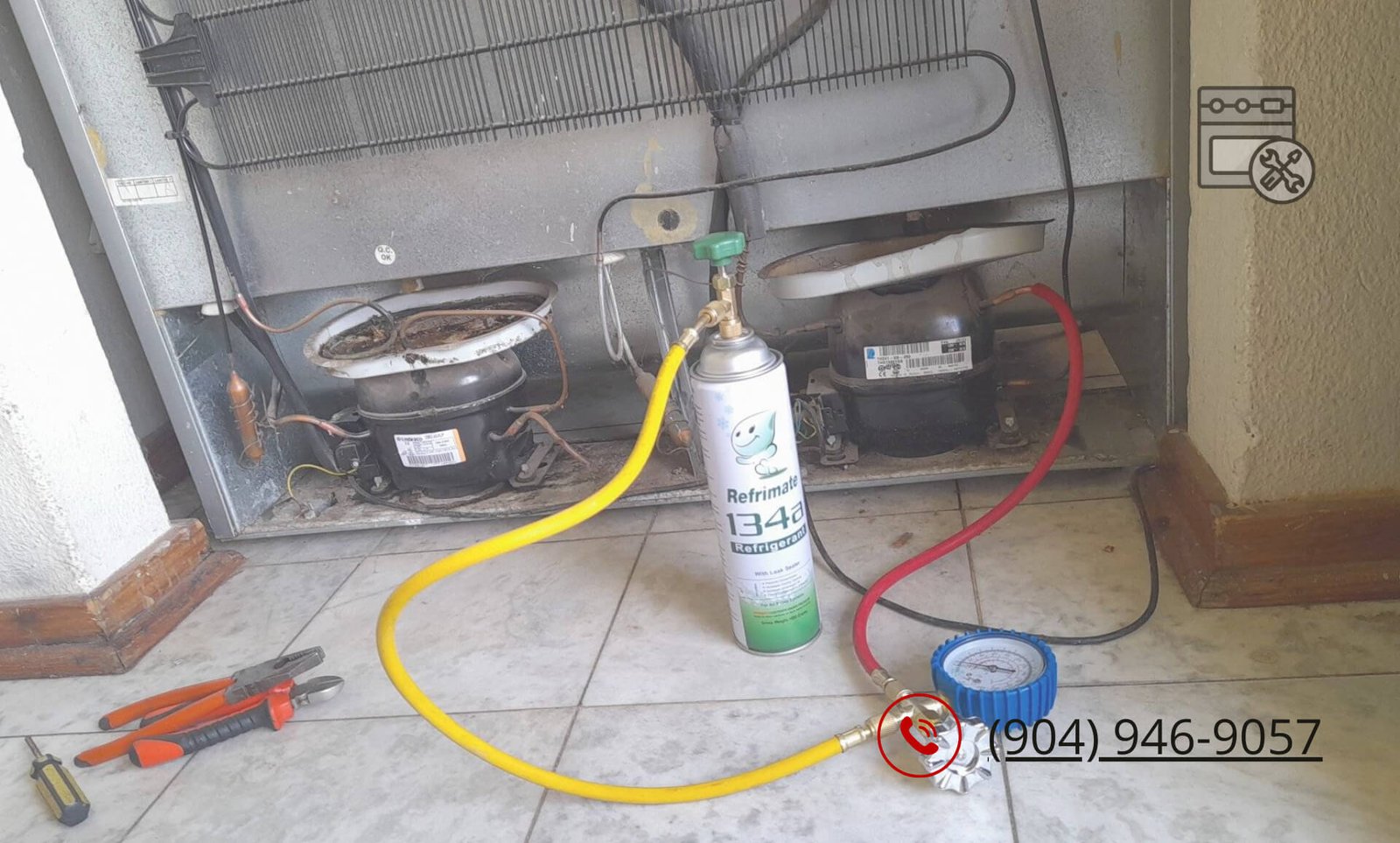
A refrigerator that runs without cooling to its set point is one of the bread-and-butter calls in refrigerator repair, and the suspect list is short: airflow, defrost, refrigerant, or the control that decides when the compressor works. The job on site is to make the machine say which.
Diagnosis on site
Dmitrii set independent thermometers in both compartments first, because a fault has to be measured before it can be named. The readings confirmed the story: both spaces sat well above their targets. The door gaskets gripped a strip of paper firmly all the way around, the coils were reasonably clean, and the evaporator showed no telltale frost patterns of a defrost problem.
The compressor side came next, and this is where the order of testing matters — condemning a thermostat to cure a compressor is a mistake that costs twice. The start relay checked out, and when the cold control was briefly taken out of the circuit, the compressor answered immediately and pulled both compartments downward. A control that stays silent while the machine underneath it works on command has written its own verdict: the thermostat's contacts had worn to the point of erratic, too-infrequent cycling.
The repair
The replacement is precise handwork more than heavy lifting. The new cold control went in with particular care for its capillary sensing tube — the thin line that actually reads the cabinet temperature. It has to be routed into position without kinks, because a pinched tube misreports forever after and the new part inherits the old symptom. In a downtown kitchen where the refrigerator occupies its alcove with an inch to spare, that routing is done patiently or not at all.
While the machine was open, the basics got a quick once-over — coils brushed off, gasket re-checked, drain path confirmed clear. Small things, but they decide whether the new control gets to work in a fair fight: in a coastal town's humidity, a refrigerator that seals and breathes properly runs noticeably less for the same result.
With the control set to a steady middle range, the refrigerator then had to earn its sign-off: several full cycles observed around the set point, compressor kicking in and out on schedule, both compartments holding where they should.
The outcome
By that evening the cabinet held its target steadily, and the homeowner confirmed over the following days that the spoilage had stopped. The control and the labor carry our 1-year parts and labor warranty. Total working time was under an hour once the diagnosis was settled — a small, contained repair that bought a solid old machine years of further service. The warranty terms went onto the paperwork in writing, which is worth insisting on after any repair, anywhere.
What this means for your refrigerator
The lessons that travel beyond this one kitchen:
- A running fridge that will not get cold is often a control fault, not a compressor death. Do not price a replacement appliance before the cheap suspect has been tested.
- Erratic cycling is a tell worth noticing. A machine that runs in strange, irregular spells is describing its own problem — here is what unusual cycling patterns mean.
- Steady warm drift has its own checklist. When temperatures climb over days, work through the common causes of a refrigerator not cooling before assuming the worst.
- Simple mechanical refrigerators are deeply repairable. No boards, no software — which is exactly why older units in older houses are often worth keeping.
- Act before the second grocery loss. The repair cost does not grow with waiting, but the food bill does.
Refrigerator repair in St. Augustine
Downtown's compact kitchens and long-serving appliances are familiar territory for us, and most thermostat and control faults are finished in one visit. Diagnosis runs $75 and is waived on any approved repair; same-day slots open up as the schedule permits. Send a repair request or call 904-946-9057.
FAQ
How can you tell a bad thermostat from a bad compressor?
By making each prove itself separately. If the compressor runs normally the moment the control is bypassed, the control is the fault; if the machine still will not cool with the control out of the picture, attention moves to the compressor circuit and the sealed system.
Is an older refrigerator worth repairing?
Often, yes — especially the simpler mechanical models. A single worn control is a small fix on a machine that may otherwise have years left, and it is far less disruptive than replacing a unit that fits a tight, older kitchen exactly.
What setting should the new thermostat use?
Start in the middle of the range and let the cabinet stabilize for a day before judging. Chasing the dial up and down in the first hours only muddies the picture; a healthy control holds a steady set point without help.