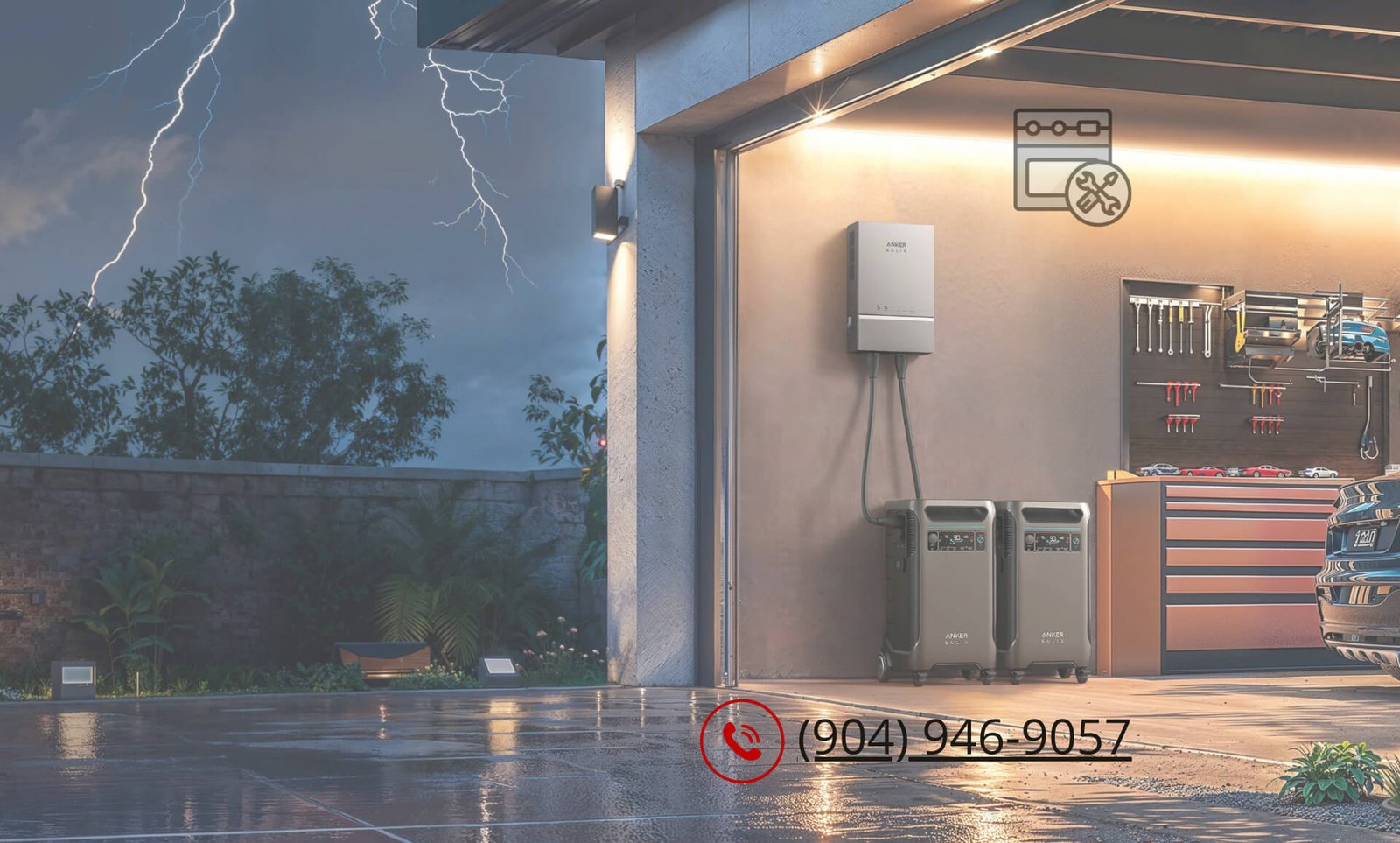
Every hurricane season, the same thing happens in Florida. The storm rolls through, the lights go out, and somewhere across the neighborhood a generator rumbles to life. Problem solved - or so it seems.
Then the calls start coming in.
A refrigerator that won't cool. A washing machine stuck mid-cycle, blinking error codes no one's seen before. A smart thermostat that's just... dead. At GDoing LLC, we get these calls every single season, and almost every time, the story is the same: the generator ran, but nobody thought about what it was doing to the appliances plugged into it.
Here's what most people don't realize: a generator can be the reason your appliances fail, not just the storm.
The problem with "just plugging in"
Generators are blunt instruments. When they start up, when they're running near capacity, or when multiple high-draw appliances kick on at once, the voltage swings. Sometimes it spikes. Sometimes it dips. Either way, your refrigerator's compressor, your washer's control board, and your HVAC's electronics are absorbing all of it — and they weren't designed to.
Cheap surge protectors won't save you here. The ones sitting in a strip on your floor are built for the relatively clean power coming out of your wall, not the rougher output of a portable generator under load. They'll let the voltage through and you won't know until your compressor burns out.
What actually works is a surge protector rated and tested for generator use — ideally one installed between your generator and your home's circuits by someone who knows what they're doing. It's not exciting hardware. It's also the difference between a working refrigerator after the storm and a $1,200 repair call.
The basics that get skipped every year
People who've owned generators for years still make the same mistakes. Here's what actually matters:
Run it outside. Carbon monoxide is invisible and it kills fast. Not near the garage door, not under the porch — outside, away from any opening into the house.
Don't stack appliances when you start up. Let the generator warm up, then connect your essentials one at a time. Your refrigerator and your air conditioner running simultaneously can create a load spike that damages both.
Check it before the storm, not during. A generator that's been sitting in the garage for eleven months may not start reliably when you need it. Run it under load at least once before hurricane season. Check the oil, check the fuel, listen for anything that sounds off.
Know what your generator can actually handle. The wattage on the label is the maximum — not the comfortable operating range. Running at or near capacity for hours puts strain on the unit and makes voltage instability worse.
Choosing a generator that won't fight you
If you're still shopping, the choice that most people overlook is inverter vs. conventional.
Conventional generators are cheaper and produce more raw power, but the electricity they output is noisier — meaning more fluctuation, more risk for sensitive electronics. Inverter generators cost more, run quieter, and produce cleaner power that's much gentler on compressors, control boards, and anything with a microprocessor in it.
For a Florida home with a modern refrigerator, an HVAC system, and the usual assortment of devices, an inverter generator with proper surge protection is almost always the smarter long-term investment. You'll spend less on repairs after storms than you saved on the cheaper unit.
Fuel type matters too. Gasoline is widely available but degrades in storage and can be hard to find after a major storm when everyone's in line at the same stations. Propane stores indefinitely and doesn't gum up carburetors. Dual-fuel models give you flexibility when supply is unpredictable — worth considering if you're in a frequently hit area.
Before the season starts
There's a narrow window between "the storm is coming" and "it's too late to prepare anything properly." Use the time before it to:
Test your generator under actual load — not just idle. Run your refrigerator and a few lights off it for an hour and watch how it handles it.
Check your surge protection. If you're not sure what you have or whether it's rated for generator use, assume it isn't.
Make a priority list. You can't run everything. Decide in advance what matters most — refrigeration, medical equipment, fans — and know what order you're powering things up.
Keep a repair contact saved. If something does fail after a storm, you want to call someone who's seen it before and can tell you quickly whether it's fixable or done.
What to do if something's already wrong
If your refrigerator isn't cooling after a storm, your washer won't complete a cycle, you're smelling something burnt near an appliance, or breakers are tripping in ways they never did before - stop using the appliance and call someone.
These aren't always catastrophic failures. Sometimes it's a control board that can be replaced. Sometimes the compressor took a hit but the unit is still salvageable. The longer you wait and keep trying to run a damaged appliance, the worse and more expensive it gets.
GDoing LLC handles storm-related appliance repair across Florida. Fast diagnostics, honest assessments, and repairs that hold — because your appliances should last longer than one hurricane season.