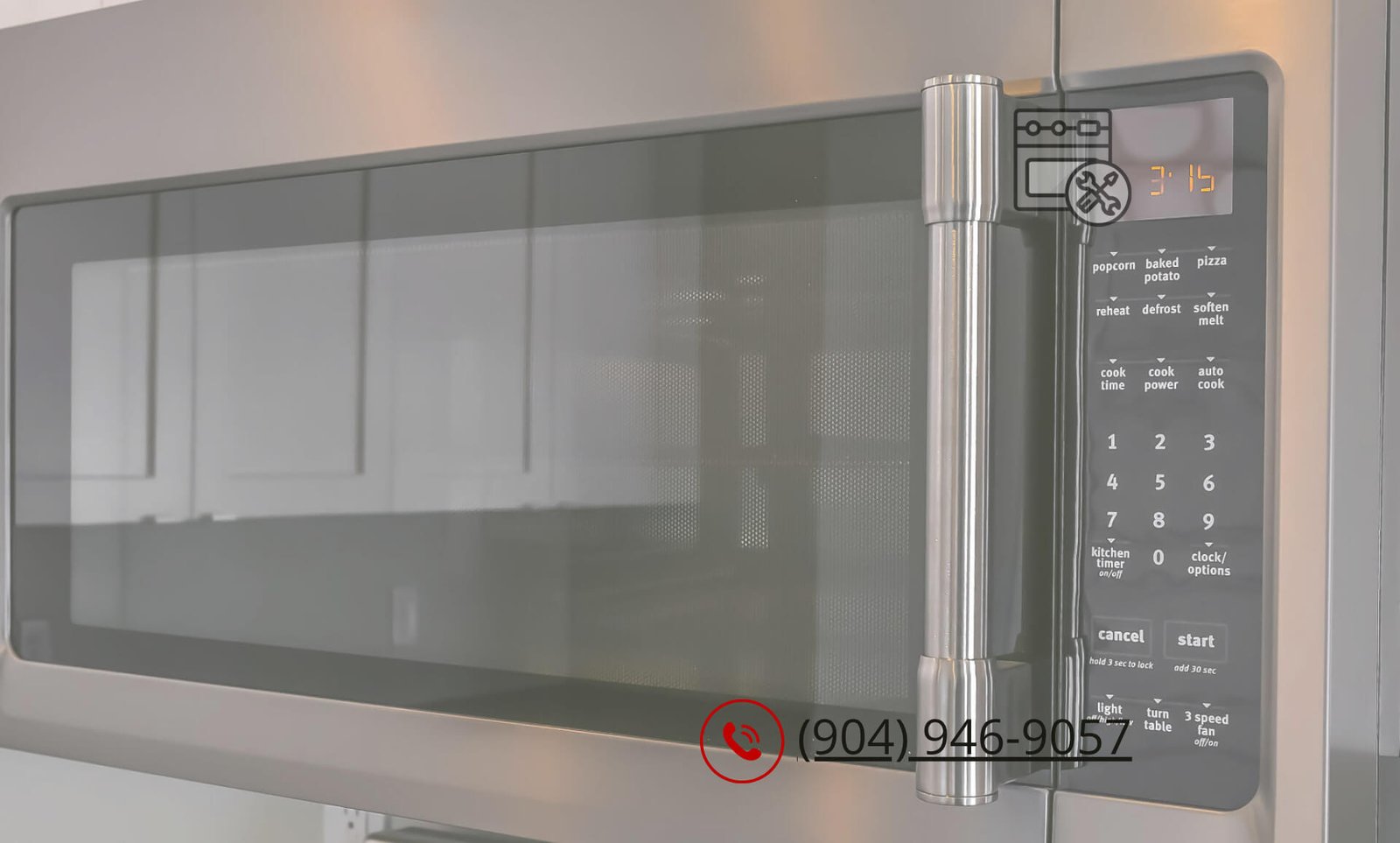
Every microwave hums a little; the transformer sees to that. But when a built-in KitchenAid starts droning loudly enough to compete with a kitchen conversation, something has changed — and because the unit is framed into the cabinetry, the sound resonates through the woodwork and feels twice as alarming as it would from a countertop box. This is the story of one such call in St. Augustine, and of how a technician narrows a noise nobody can see.
Buzzing is a useful symptom precisely because it travels with clues: what the sound accompanies — normal heat, weak heat, no heat — determines which part of the machine is complaining. Here's how that logic played out on site.
The service call
A homeowner near Davis Shores reached out about a KitchenAid microwave, built into a wall oven column with a trim kit, that had developed a loud buzz over the previous couple of weeks. It still heated food, as far as they could tell, but the noise had grown from "new and odd" to "loud enough that we stopped using it," and they were worried it was about to fail expensively — or that it had already become unsafe. Sensibly, they hadn't tried to take anything apart; they wanted a diagnosis before the appliance made the decision for them.
Diagnosis on site
Dmitrii's first step with any noise complaint is to make the machine perform it. A cup of water went in, the cycle started, and the buzz appeared on cue — along with the first big clue: the water heated normally. A strong, harsh drone paired with no heat classically implicates the high-voltage trio of magnetron, diode, and capacitor. Normal heat with added noise pushes the suspicion toward the mechanical players instead.
Next, the process of elimination. Tray and roller ring came out; the buzz continued unchanged, clearing the turntable drive. The sound didn't have the deep electrical character of a laboring transformer, and it kept going for a stretch after the cycle ended — which pointed squarely at the cooling fan, the one component that runs on after cooking in these built-in installations.
One boundary worth naming: everything to this point happened without removing the cabinet shell, and that's deliberate. The capacitor in a microwave holds onto a dangerous, potentially lethal charge even after days unplugged, so the interior is technician territory — with discharge tools — and never a place to send an owner with a screwdriver. Homeowner checks stop at the cavity and the vents; this homeowner had drawn exactly the right line.
With the trim kit off and the unit slid partway out — the step that does require a technician on these installations — the answer was waiting. The intake and exhaust path had matted over with years of fine dust and kitchen film, forcing the cooling fan to work against the blockage, and a vent grille screw had backed out, letting the panel rattle in sympathy with the starved fan. The fault wasn't one dramatic part; it was airflow, and the cabinet had been amplifying the evidence.
The repair
The remedy was methodical rather than heroic. The vent path was cleared and cleaned end to end, the fan checked for free rotation and bearing play, the grille reseated and its hardware snugged, and the door latch verified while everything was accessible — a loose latch is another classic rattle source on built-ins. The unit went back into its cutout flush and level, and a full heating test ran start to finish: normal output, and the old quiet back. The whole visit took well under an hour.
The outcome
The homeowner approved the service on the spot, which meant the $75 diagnostic fee was waived into the work — the way every GDoing visit is structured. No major parts were needed this time, and that's the honest ending: a good diagnosis sometimes subtracts hardware instead of adding it. Had the fan motor needed replacement, the part and the labor would have carried our 1-year warranty, and the homeowner knows that coverage applies to any future repair. A check-in a few weeks later confirmed the microwave was still running quietly through daily use.
What this means for your microwave
- Log what the buzz travels with. Normal heat points mechanical (fan, vents, loose trim); weak or no heat points electrical — and a unit that runs without heating needs professional eyes promptly.
- Built-ins need breathing room. Vent paths hidden behind trim clog invisibly; if your unit is framed into cabinetry, have airflow checked whenever it's serviced.
- Do the free test first. Pull the tray and roller ring and run a short cycle — if the noise stops, you've found it, and our turntable guide covers the snap-out fixes.
- Never run it empty, buzzing or not: with nothing to absorb the energy, the machine absorbs it instead.
- Leave the shell closed. The stored charge inside doesn't care that the plug is out of the wall.
Microwave repair in St. Augustine
Coastal life is not gentle on kitchen electronics: humid air condenses in vent paths, salt rides in on the sea breeze, and busy households keep microwaves working overtime. If yours has picked up a new sound anywhere in the St. Augustine area, our microwave repair service is diagnostic-first — Mon–Sat, 9 to 7 — and same-day when the schedule allows. Request a visit online or call 904-946-9057.
FAQ
Is a buzzing microwave dangerous to use?
It depends on the buzz. Noise with normal heating is usually mechanical and low-risk in the short term. A loud drone with weak or no heat, any snapping or arcing, a burning smell, or a sound that continues after the door opens means unplug it and stop — those patterns involve the high-voltage side.
Why do built-in microwaves seem louder than countertop ones?
The cabinetry acts like a soundboard: vibrations from fans, trays, and loose trim transfer into the surrounding wood and amplify. The same fault that would be a faint rattle on a countertop can drone through an entire built-in wall — which, usefully, means built-ins report their problems early.
What does it mean when the fan keeps running after the microwave stops?
On most built-in and over-the-range models, that's by design — the fan runs on to cool the electronics after heavy use. It becomes a symptom only when the after-run gets longer or louder over time, which usually signals a blocked vent path making the fan's job harder.