You set the oven to 375°F, wait twenty minutes, and the casserole is still cold. An oven that's not heating always seems to fail on the day you need it most.
If the cause is a burned-out heating element, it's one of the more affordable oven repairs. Angi puts the cost of a broken heating element at $150 to $400, and in most cases the part is replaced rather than repaired. Below you'll see what moves the oven heating element replacement cost up or down, how to tell whether the element is really the problem, and when it's smarter to hand the job to a pro.
Quick takeaways
-
A professional oven heating element replacement typically runs $150–$400.
-
Only electric ovens have heating elements. Gas ovens use an igniter.
-
Check your breaker first. A half-tripped breaker can stop an oven from heating.
-
If your oven is past its expected lifespan and needs other repairs, compare the bill with the price of a new one.
Oven Heating Element Replacement Cost at a Glance
Here's how national cost guides line up:
|
What you're paying for |
Typical range |
Source |
|
Heating element repair or replacement (pro, all-in) |
$150–$400 |
|
|
Bake element (the coil at the bottom) |
$100–$300 |
|
|
New oven, installed (for comparison) |
$700–$1,600 |
These are national averages, so your local price and your exact model may land above or below them.
How GDoing prices a repair. Our service call is $75, and that amount is applied toward your repair if you choose to go ahead. Pricing is upfront, so you know what you'll pay before any work begins.
What Makes Oven Heating Element Replacement Cost More (or Less)
Two ovens with the same symptom can produce very different bills. The main reasons:
-
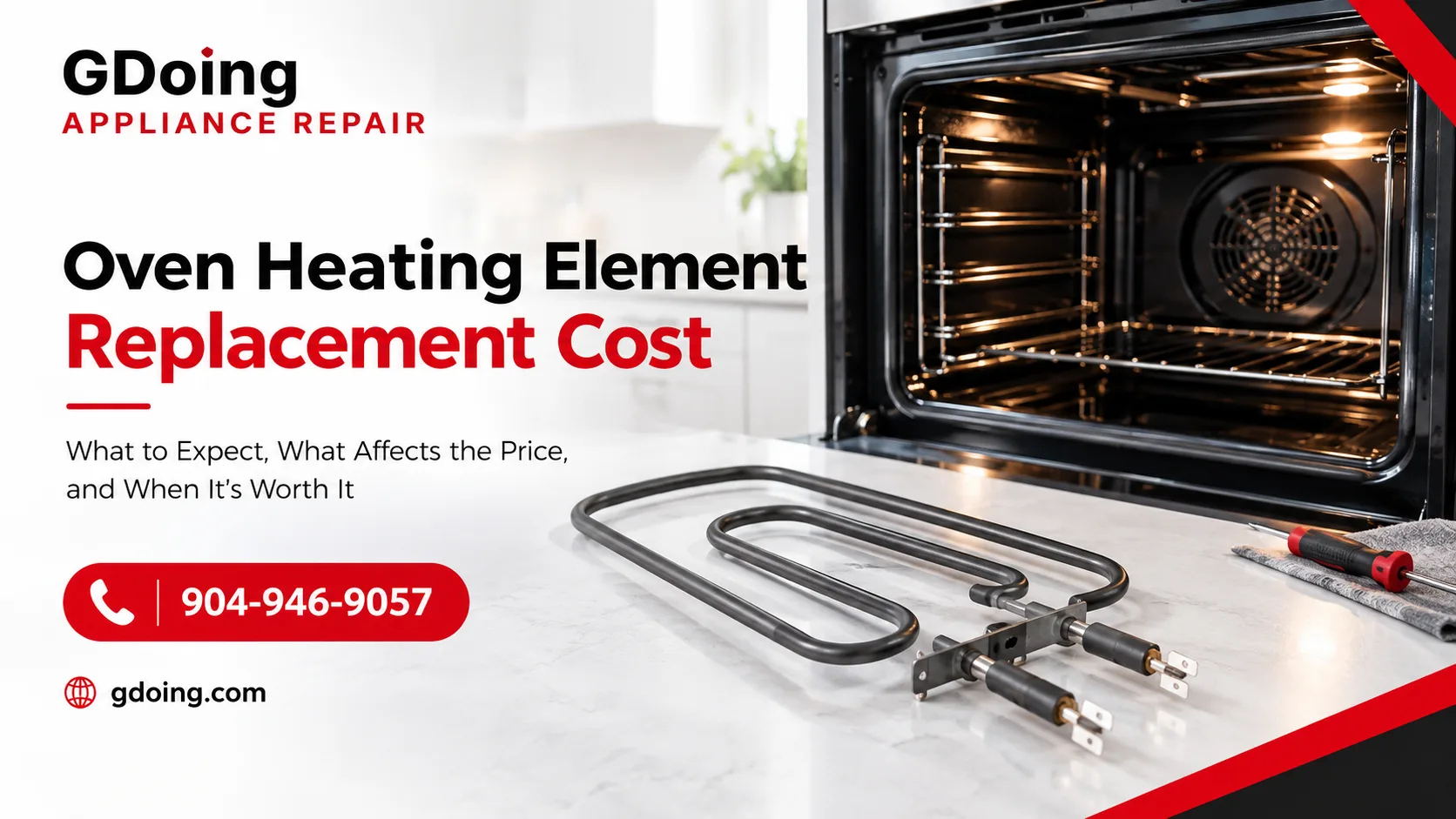
Which element failed. Most electric ovens have two: a bake element at the bottom and a broil element at the top. Some convection models add a third around the fan, which takes more work to reach.
-
Brand and model. Parts for premium brands usually cost more than parts for mainstream ranges.
-
Access. Wall ovens and models with hidden elements take longer than a range with an exposed coil.
-
Original vs. generic parts. We install genuine manufacturer parts, and our repairs are covered by a 1-year warranty on parts and labor. A cheaper generic part may save a little now, but it may not fit or last as well.
-
What else is going on. Sometimes the element isn't the whole story. Wiring, terminals, or a sensor can be involved, which is why we diagnose before we order a part.
Oven Not Heating? 5 Signs It's the Heating Element
-
The element doesn't glow. With the oven on, a working element turns red. No glow usually means no heat.
-
You can see damage. Blisters, cracks, or burnt spots on the coil are a giveaway. Let the oven cool completely before you look closely.
-
Food cooks unevenly. If the broil element is dead, only the bake element is heating, which means pale tops and overdone bottoms.
-
Bake works but broil doesn't (or the other way around). That points to one specific element instead of the whole oven.
-
Preheating takes forever, or the oven never reaches the temperature you set.
Check the simple things first
Before you assume the worst, start with the basics. Whirlpool suggests seeing whether a breaker is stuck halfway between "on" and "off", then confirming the outlet works, and only then looking at the oven's parts with your owner's manual in hand. If one of those is the culprit, you may not need a repair.
Gas oven? This repair doesn't apply
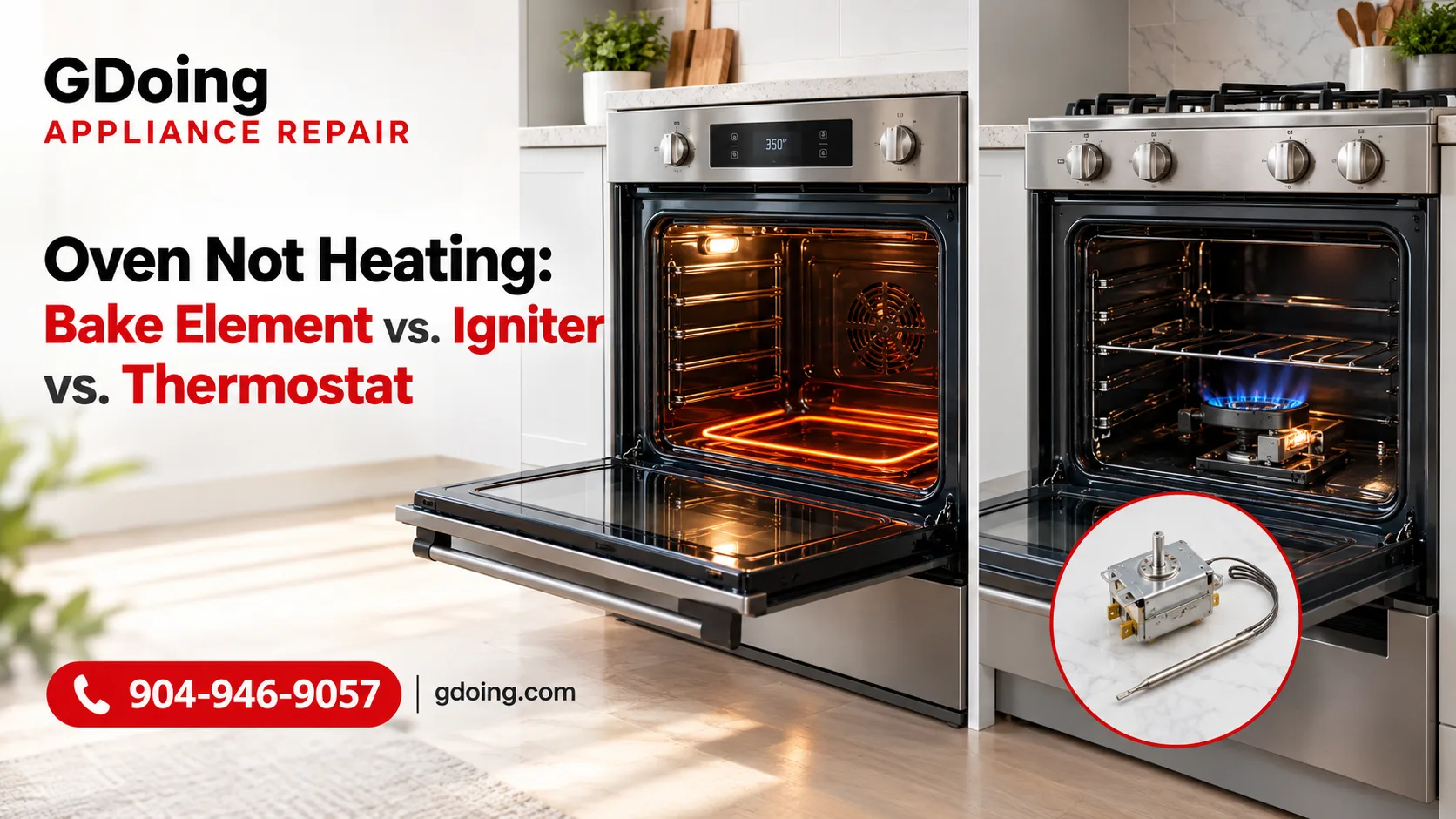
Gas ovens have no heating element. When one won't heat, the igniter is the most common failed part. Because gas is involved, we recommend leaving igniter work to a technician.
Other faults can also leave an electric oven not heating, including a bad temperature sensor, a faulty thermostat, or a control board problem. A lit display only tells you the controls have power, not that the elements are working.
How to Check the Element Safely
You can do a basic check yourself, but respect the electricity. Most ovens run at well over 200 volts, which can cause fatal injury. Always cut power first by unplugging the range or switching off its breaker.
-
Power off, and let the oven cool.
-
Look closely at the element and its terminals for blisters, breaks, or burn marks.
-
Test continuity with a multimeter. With the element disconnected, set the meter to its lowest resistance scale and touch the probes to the terminals. A good element usually reads between 19 and 115 ohms, depending on the model, so check your manual for the exact number. No reading at all means the element is broken.
If any step makes you uneasy, stop there. We'd much rather you stay safe than save a few dollars.
Oven Heating Element Replacement: DIY or Call a Pro?
Oven heating element replacement is among the more approachable appliance repairs. The basic process:
-
Turn off the power and let the oven cool.
-
Remove the racks.
-
Unscrew the element from the oven wall and gently pull it forward.
-
Photograph the wire connections, then disconnect them.
-
Connect the new element, secure it, restore power, and test.
The step that matters most comes before all of that: buy the exact part for your model number. Elements that look alike can differ in size, wattage, and connectors.
DIY makes sense when the element is easy to reach, you're sure it's the failed part, and you're comfortable working near electrical connections.
Call a professional when:
-
You have a wall oven or a hidden-element model.
-
The terminals or wiring look burnt or melted.
-
A new element burns out again.
-
You aren't certain the element is the cause.
-
You want the work covered by a warranty.
A technician confirms the diagnosis, installs the right part, and checks the surrounding components in the same visit. That's how we work at GDoing. See our oven repair page for details.
Repair or Replace the Whole Oven?
A new element costs a fraction of a new oven, so repair usually wins. Age still matters. According to the National Association of Home Builders, an electric range lasts about 13 years on average, though well-kept units can go longer. HomeGuide reports that a new oven costs $700 to $1,600 installed.
A simple way to decide:
-
Newer oven, one failed element: repair it.
-
Older oven with several problems (a failing control board, a worn door seal, more repairs on the way): it may be time to put that money toward a new one.
If you're unsure, ask us. If a repair isn't worth doing, we'll tell you.
Why Elements Fail, and How to Help the Next One Last
Elements wear out from years of heating and cooling. The self-clean cycle is a common question. Consumer Reports' experts say self-clean damage is the exception, not the rule. RepairClinic, on the other hand, notes that the extreme heat can speed up the failure of worn parts, including bake and broil elements. On an older oven, use it sparingly.
A few habits help:
-
Wipe up spills once the oven has cooled.
-
Skip the self-clean cycle unless you need it.
-
Act on early warning signs, like slow preheating or uneven browning.
What to Expect When GDoing Repairs Your Oven
A broken oven throws off the whole week, so we built our service around getting you back to cooking:
-
Same-day service. In most cases, a technician responds in under four hours.
-
Root-cause diagnosis. Our "First Time Right" approach looks for the real cause, not only the symptom. Our first-time fix rate is 95%.
-
Genuine manufacturer parts and a 1-year warranty on parts and labor.
-
Upfront pricing. Your $75 service call is applied toward the repair if you choose to proceed.
-
All major brands, including Miele, Bosch, LG, Samsung, Whirlpool, Sub-Zero, Viking, and Thermador.
We serve homeowners in Jacksonville, St. Augustine, Palm Coast, and nearby Northeast Florida communities. If your oven is still under the manufacturer's warranty, contact the manufacturer or retailer first.
Ready to Get Your Oven Heating Again?
Whether it's a quick fix or a full oven heating element replacement, you don't have to sort it out alone. If you're in the Jacksonville, St. Augustine, or Palm Coast area, tell us what broke (brand, model, and symptom help us arrive prepared). We take requests daily from 9 AM to 7 PM, and we'll get your oven heating again.
FAQ
How much does oven heating element replacement cost?
Most professional replacements fall between $150 and $400, based on national cost guides. The final price depends on the element type, your oven's brand and model, and how easy the part is to reach.
How long does an oven heating element replacement take?
The hands-on swap can be quick. What varies is diagnosis, access, and whether the right part is on hand.
Can I use my oven if only the broil element is broken?
You can often still bake, but results may be uneven and you can't broil. If you notice sparks, smoke, or a burning smell, stop using the oven, switch off its breaker, and call for service.
My oven is not heating but the display works. What now?
Start with the breaker and outlet. If both are fine, the cause could be a failed element, a temperature sensor, a thermostat, or the control board. A technician can test each one so you don't pay for parts you don't need.
Is it worth replacing the heating element in an old oven?
Often yes, if the oven is otherwise in good shape. If it's near the end of its expected life and has other problems, compare the repair with the cost of a new oven before you decide.
Does GDoing charge to diagnose the problem?
Our service call is $75, and it's applied toward your repair if you choose to proceed.