A cold oven at dinner time is stressful, and the cause isn't always obvious. Why is my oven not heating up? Match the symptom to the part. An electric oven that stays cold points to the bake element, a gas oven that stays cold points to the igniter, and an oven that heats to the wrong temperature points to the temperature sensor, which many people call the thermostat. Below, you'll see how to confirm which one it is, what's safe to test yourself, and where DIY should stop.
Why Is My Oven Not Heating Up? Start with Three Questions
-
Is your oven gas or electric? Gas ovens have an igniter. Electric ovens have heating elements.
-
Does anything heat? In an electric oven, if the broiler works but bake doesn't, the bake element or its connections are the suspect. In a gas oven, watch whether the igniter glows.
-
Does the temperature match what you set? If the oven heats but runs hot, cold or unevenly, look at the sensor first.
Whirlpool's own troubleshooting guide draws the same line: a faulty igniter in gas ovens, a broken heating element in electric ones. It also tells you to check that the door seals properly and that the temperature sensor sits in its correct position.
Oven not heating properly: too cold, uneven or slow
When an oven is not heating properly but isn't completely dead, common causes include a drifting temperature sensor, a worn door seal that lets heat escape, or a weakening heating element. Check the door gasket for gaps or tears first, since it takes a minute. If the seal is fine, jump to the thermostat section below.
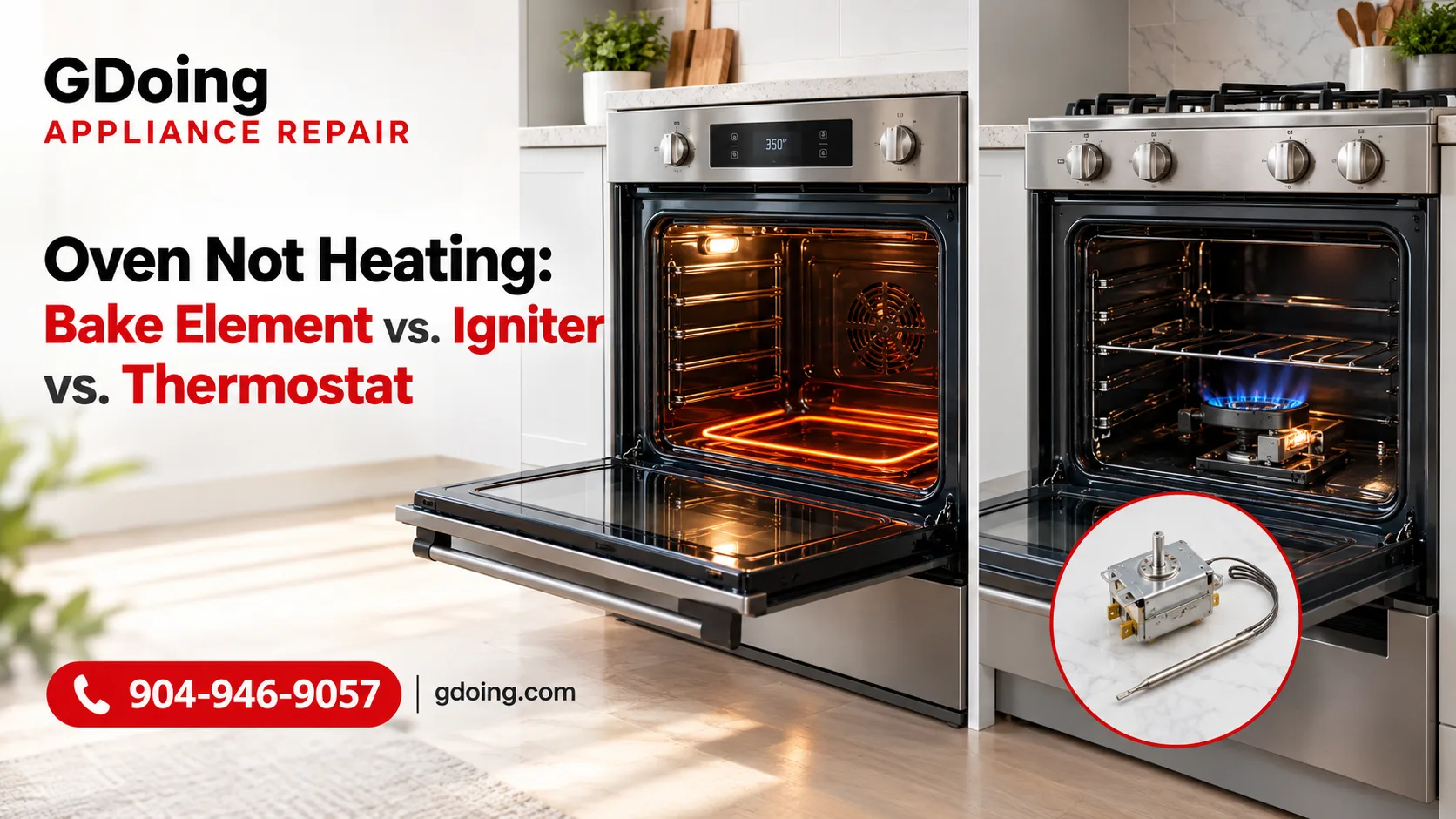
Bake Element vs. Igniter vs. Thermostat at a Glance
|
Part |
Found in |
Typical signs |
Check first |
DIY? |
|
Bake element |
Electric ovens |
No red glow, dark patches, broiler works but bake doesn't |
Visual check, then resistance test with power off |
Testing yes, replacing if you're comfortable |
|
Igniter |
Gas ovens |
Glows orange or doesn't glow, burner never lights |
Watch the glow during preheat |
Observe only; current test and replacement are for a pro |
|
Temperature sensor (thermostat) |
Gas and electric |
Wrong temperature, long preheat, uneven baking |
Resistance at room temperature |
Testing yes |
Safety first: electric ovens run on 240 volts, so switch off the breaker before touching any wiring. If you smell gas, leave the house and call your gas utility from outside. Never bypass a gas safety valve.
Oven Bake Element Not Working: Signs and How to Test an Oven Heating Element
If an electric oven stays cold, the bake element, the coil on the oven floor, is the first suspect. When an oven bake element is not working, you'll usually see one of these:
-
No red glow during preheat. Whirlpool says an element that doesn't glow red when the oven is heating may need replacing.
-
Dark patches, blisters or a visible break in the coil
-
Darkened or melted terminals where the wires connect
-
A cold oven while the broiler still works
Elements wear out gradually: years of heating and cooling cycles can crack the coil, and the weak spot is where it fails. That's why a dark patch or blister is an early warning, not just a cosmetic flaw.
How to test an oven heating element
When the heating element is faulty, a multimeter can help confirm the problem in a few minutes:
-
Switch off the breaker and let the oven cool.
-
Remove the element's mounting screws and pull it forward slightly so you can reach the terminals. Inspect the wires and terminals for damage.
-
Take a photo of the wiring before disconnecting any wires, so you can reconnect them correctly.
-
Disconnect one wire from the element.
-
Set the multimeter to ohms and touch one probe to each terminal.
-
Read the result. A reading near the spec for your model means the element is intact. An infinite reading means it's broken.
The spec varies by model. AppliancePartsPros' bake element test gives about 20 to 25 ohms for one Whirlpool range, and the guide stresses that this depends on your model, so check your technical sheet. Skip the live-voltage test some guides describe. Measuring 240 volts with the oven running is a technician's job.
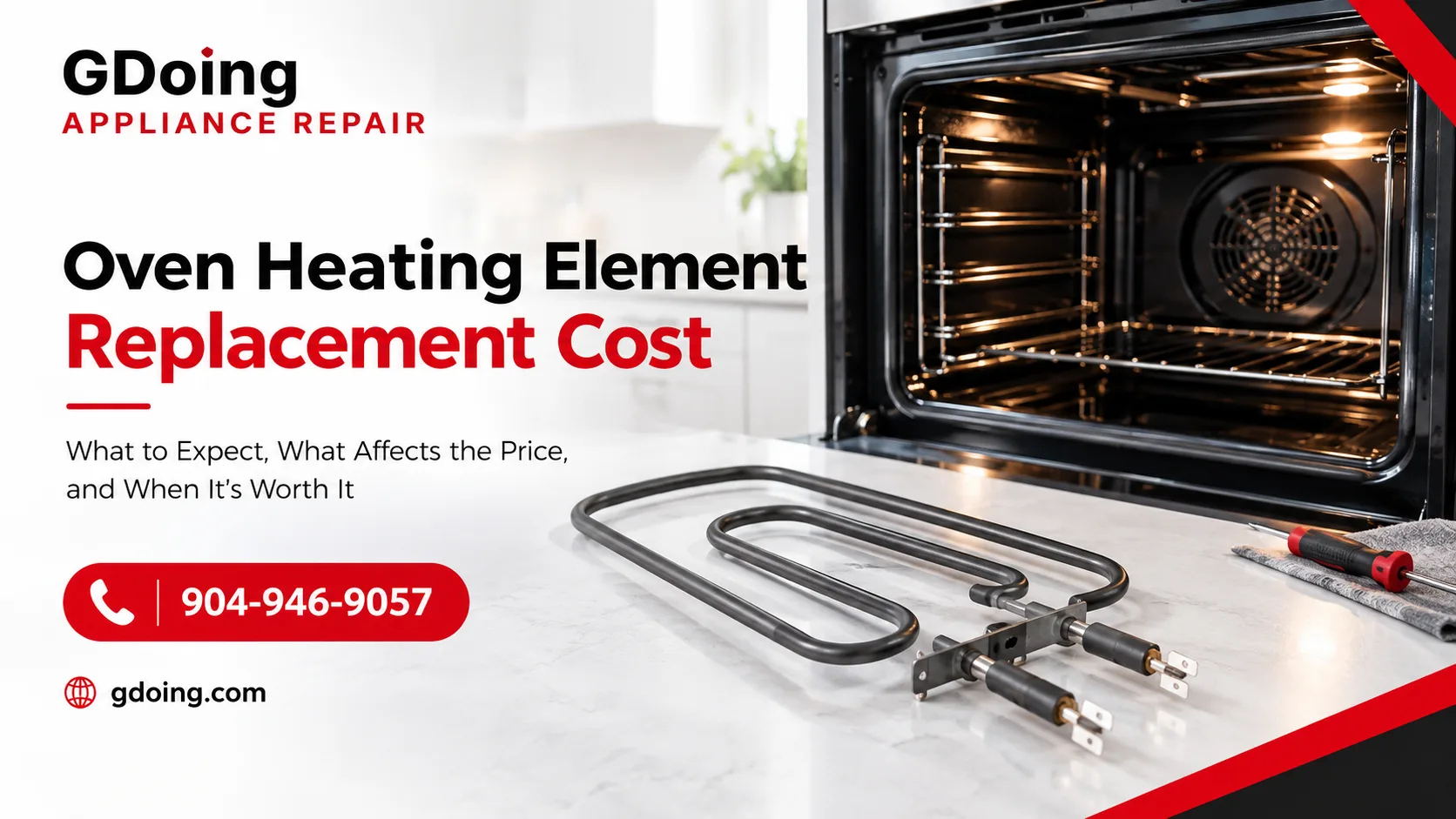
Wondering what a replacement involves? Our guide to oven heating element replacement cost explains what affects the price.
Case: ZLINE oven with melted connectors on the heating element
A ZLINE oven came to us in St. Augustine with melted connectors on the heating element. That's worth taking seriously. Melted terminals mean heat built up at the connection, usually from a loose or damaged contact, and a new element alone won't solve it if the connector stays damaged. We repaired the damaged connection and made sure the element circuit was sound before handing the oven back. If you see scorched or melted terminals on yours, switch off the breaker and call. Our team handles appliance repair in St. Augustine and nearby areas.
Gas Oven Igniter Problems: When It Glows but the Oven Stays Cold
If a gas oven stays cold, the igniter is the usual culprit, and it can glow and still be bad. Here's why. The igniter heats up, and the current it draws warms a small part inside the gas safety valve until the valve opens. Gas then flows and the glowing igniter lights it. As an igniter ages, it weakens. It still glows, but it can't draw enough current to open the valve, so no gas flows.
Gas oven igniter problems are easy to spot if you know what to look for. During preheat, look at the igniter near the oven burner, and your owner's manual shows where it sits. A healthy igniter glows bright white. If it stays orange or red, or glows and nothing lights, it's too weak. AppliancePartsPros' igniter guide says the same.
Measuring the current the igniter draws takes a clamp ammeter, and the right number depends on the igniter and valve type. That and the replacement itself are best left to a technician, because the work happens right next to the gas line.
Case: Whirlpool gas oven, igniter replacement in Palm Coast
A Whirlpool gas oven in Palm Coast stopped heating. The diagnosis pointed to the igniter, and we replaced it. It's one of the most common repairs on gas ovens, and a good example of why a glowing igniter isn't proof it works. We serve Palm Coast and the surrounding area: see our appliance repair in Palm Coast.
When the igniter isn't the problem: the gas valve
If the igniter is healthy and gas still doesn't flow, the next suspect is the gas safety valve. A failed valve blocks the gas even when the igniter is perfect. A gas pressure regulator that fails can have a similar result: the igniter glows, but there's nothing to light. Both sit on the live gas path, so this is technician-only work.
We saw this in a Whirlpool oven where the gas valve turned out to be the cause, and replacing it brought the oven back. If you want to know what that repair involves, read our article on gas valve replacement in St. Augustine.
Oven Thermostat Problems and How to Test an Oven Thermostat
If your oven heats but the temperature is wrong, suspect the temperature sensor before the element. A quick note on terms: most modern ovens don't have a mechanical thermostat. They have a thin sensor probe on the back wall that tells the control board how hot the oven is. People still call it the thermostat, and the symptoms of oven thermostat problems are the same:
-
The oven runs hotter or colder than the dial
-
Preheat takes much longer than it used to
-
Food bakes unevenly, or the temperature drifts
Confirm the problem before you open anything. Put an inexpensive oven thermometer on the middle rack, preheat to 350°F and check it after 20 minutes. If the reading is far from 350, the sensor, calibration or control is off. If it's close, the oven is probably fine.
How to test an oven thermostat (temperature sensor)
-
Switch off the breaker and let the oven cool to room temperature.
-
Locate the sensor probe on the back wall inside the oven and trace its wire to the connector. On some models you'll need to pull the range away from the wall, so stop here if that's not comfortable.
-
Disconnect the connector and measure resistance between the two prongs.
-
Compare. Many sensors read about 1080 to 1090 ohms at room temperature, according to PartsDr's test guide. A reading far off that means replacing the sensor. Confirm the value for your model.
-
If the sensor reads normal, look at the calibration setting and the control board next.
One caveat: a sensor can read fine when cold and still misbehave when hot, though PartsDr notes that this is uncommon. On an older oven with a mechanical thermostat, an inexpensive oven thermometer is the simplest check. If the oven is far from the dial setting, the thermostat or calibration needs service.
If nothing heats at all, the cause may be a blown thermal fuse, a safety part that cuts power on overheating, or the control board. If your oven stopped heating after a self-cleaning cycle, our guide on self-cleaning oven safety tips and risks explains what that cycle puts your oven through.
When to Call a Technician
Call a technician if:
-
You see scorched or melted terminals, or smell burning
-
A gas oven's igniter glows but the burner never lights
-
You smell gas (leave the house first, then call)
-
Every test checks out, but the oven still won't heat
-
You'd rather not work with 240 volts or a gas line
How We Fix Ovens
We find the actual cause instead of replacing parts and hoping. You get a plain-language explanation of what we found, a repair with original replacement parts, and a warranty on the work. Same-day service is available whenever possible. If it isn't heating, contact us.
FAQ
Why does my oven heat but not reach the set temperature?
Common causes include a drifting temperature sensor, a worn door seal or a weakening element. Check the door seal first, then test the sensor's resistance.
Can I keep using a gas oven if the igniter is weak?
It's best not to. A weak igniter can delay lighting and the oven won't heat reliably. If you ever smell gas, turn the oven off and leave the house.
Is it safe to test an oven heating element myself?
Yes, if you're comfortable using a multimeter and the breaker is off. Never test live voltage unless you're a qualified professional.
Could a blown thermal fuse stop the oven from heating?
Yes. A thermal fuse cuts power when the oven overheats. On many models, once it blows, the oven won't heat. Finding out why it blew is part of the repair.